Showing posts with label Hari Nasional. Show all posts

Saturday, 20 April 2013

"Panggil Akoe Kartini Sadja" - Kartini Day Appreciation Post


"Kartini's hart sloeg warm de toekomst tegen,

Aan't garen van blemen, haar zielgewijd,

Reikhalzend uit teedere droomen ontwakend,

Tot heil van heel haar zachte volk,


In lijden en strijden met velen verbonden,

Na duisternis wijzend naar 'schemerend licht,

In blij ontluikenden morgenstond."


(Courtesy of "Kartini dari Sisi Lain")

***

Today is the 21st of April, in which Indonesians celebrate one of our most famous national heroines in history; Raden Ajeng Kartini.

To start this, let us all go back to the time where Indonesia was still a part of the Dutch colony, in the 19th century Dutch East Indies.


At that time, inlanders (another term for the native Indonesians in Dutch East Indies) were very much limited from the chance to be well-educated. While some children struggled to work in order to fulfill their family's needs, some inlander children who were recognized as a part of higher society families at least got a bit of chance to be educated. Lady Kartini was one of them.

Kartini, born in Jepara (a region in Central Java) to a noble Javanese family on 21 April 1879, managed to go to a Dutch school. But when she was 12, she was prohibited to continue her education because of her tradition commonly practiced by the Javanese (Indonesian would call this as 'pingit'), in which young girls are to be 'isolated' in order to prepare for their marriage in the future.


In her isolation period, because of her ability to speak Dutch, she then gained several Dutch pen pals. One of them was named Rosa Abendanon. She wrote letters to her regularly and then in the future, someone collected her letters and compiled them into a book called "Habis Gelap Terbitlah Terang" (Out of Dark Comes Light).

Not only that, after her marriage with a Javanese nobleman, Kartini managed to build school for women. It was a kind of school which taught women simple things like how to read, count, and sewing clothes, but it brought great change to a lot of people.

Kartini then was starting to be recognized as the woman who lifted Indonesian women status and taught people that anyone can have education, no matter what gender, race, religion, or even cultural background they have.

It was a sad thing though that Kartini didn't manage to live a long life. She died in the age of 25 after giving birth to her son. After Indonesia independent, Soekarno declared her national day to be set up on 21 April. So that people would never forget how a certain woman could fight to raise her people's status.

***

Talk about Kartini, the Dutch actually also gave some little appreciations for her


(courtesy of www.rnw.nl)

They said that there are several streets that are named after her in several different cities in the Netherlands. What thrilled me is that not only Kartini, but there are several Indonesian heroes names too that are being set up as street names in the Netherlands.

This is beyond amazing.



Dadah


Friday, 9 November 2012

Bloody Surabaya

Obviously I'm not trying to curse like a British by using the word "bloody," but tomorrow Indonesians will be celebrating what we call "Hari Pahlawan," or the National Heroes Day.

Here's a brief story about what happened on 10 November.

-oOo-

It all started in the time where we were struggling to protect our identity, the identity of a free country. In 1945, about 3 months after the declaration of independence by Pak Soekarno and Pak Hatta in Jakarta, the Japanese surrendered and the Dutch came again with help from the Allies. Britain arrived in Jakarta & Surabaya in order to get control over the Japanese weapons and freeing Japanese prisoners and bringing them back to Japan, but nonetheless Britain also brought a mission to bring Indonesia back to be the Dutch East Indies again.

Meanwhile in Surabaya, On 27 October 1945 Britain arrived and gave the people of Surabaya an ultimatum to surrender their weapons. On 28 October, not only the infantries but the people of Surabaya itself attacked the British troops. The men were marching forward to fight the British no matter who they are, children and women are ordered to stay back and went to a safe place. What most memorable from this battle was a speech that caused the fiery spirits of the Surabaya people, by one of the most famous national hero in Indonesia by the name of Bung Tomo.

Bung Tomo itself read the speech furiously, saying that the Surabaya people will never be afraid of anything, not the Allies, not the Dutch, and not for the fact that they were lacking weaponries too.

People mainly used left-behind Japanese weapons, but since that time Indonesia was so little of weaponries, people even fought in battles using bamboos with sharp ends to be able to stab the enemies.

Surabaya men or "arek-arek Suroboyo" then known for their heroic spirits despite all the obstacles that they faced, at the end they got through it. Losing about 200.000 men while the Allies side losing about 2000 men.

That time, the word "merdeka" brought a lot of miracles for everyone.
With this one word, an unforgettable phrase was born, "Merdeka atau mati." "Freedom or death."

Though we are not in the era where we struggled to gain our real identity, "merdeka atau mati" is a really common phrase, especially when we celebrate our country's national day (17 August). Sad our generations these days even forgot about it too sometimes.

And so, many of them forgot about what happened on 10 November.


Dadah

Nibras Sakkir


(Image belongs to its rightful owner)

Saturday, 27 October 2012

Sumpah Gue Sumpah Pemuda!

Pertama
Kami poetera dan poeteri Indonesia, mengakoe bertoempah darah jang satoe, tanah Indonesia.
Kedoewa
Kami poetera dan poeteri Indonesia, mengakoe berbangsa jang satoe, bangsa Indonesia.
Ketiga
Kami poetera dan poeteri Indonesia, mendjoendjoeng bahasa persatoean, bahasa Indonesia.

Baru aja baca barisan-barisan yang ada di Sumpah Pemuda, lalu tiba-tiba otak diahlikan lagi ke para generasi muda Indonesia. Satu hal yang dipikirin itu: "Apa kita semua sudah menanamkan nilai-nilai yang ada di barisan ini di dalam diri kita semua?"

Ya untuk yang ketiga jangan ditanya lagi, itu mah sudah jadi bagian dari kehidupan sehari-hari. Tapi untuk yang kedua dan pertama...

Agak diragukan keberadaannya sekarang (jengjengjeng)

Tapi sepertinya kalau mencoba membahas barisan yang pertama dan kedua, pasti akhir-akhirnya bisa nyangkut dengan yang namanya nasionalisme.

Oke emang nasionalisme tuh berkobar sangat kalo udah ditambah sama yang namanya sepakbola, tapi masa cuma sepakbola atau yang bersangkutan dengan olahraga aja sih. Jujur aku kagum banget sama nasionalisme orang-orang Indonesia, apa lagi orang-orang "tempo doeloe," beuh itu mah jangan ditanya lagi, tapi terkadang suka kasihan sama orang-orang Indonesia zaman sekarang.

"Eh eh eh, kita ke Singapura yuk! Barang-barang disana banyak banget yang nggak ada di Indonesia lho~"

Jujur aja kadang telinga saya sendiri suka nyeri ngedenger yang kayak gitu.

"Akh Indonesia, malesin. Mending ke luar negeri keren."

Yang ini harus dicobain diceburin ke laut-laut Indonesia dulu kali ye.

Saya sendiri makin jauh dari tanah air, malah makin cinta, mungkin itu juga awalnya dair rasa kepunyaan terhadap Indonesia sendiri. Di mata dunia itu negara kita justru beruntung banget! Budaya, kita ada segudang, kekayaan alam, silahkan hitung sendiri, apa sih yang nggak menarik dari Indonesia?

Nasionalisme rasanya kurang lengkap ya kalau nggak ada yang namanya persatuan.
Ngomong-ngomong soal persatuan, yang namanya tawuran lagi marak tuh...


(courtesy: mobile.seruu.com)

Tawuran diawali dengan sekelompok pemuda-pemuda yang sok jagoan...

dan berakhir dengan...

(courtesy: merdeka.com)

Penghinaan.

Hoi, dulu Soekarna & Hatta itu nggak kerja secara individual untuk memerdekakan yang namanya Bangsa Indonesia. Ada gitu tawuran? Ada, tapi ngelawan Belanda, bukannya saling ngebantai satu sama lain. Nah, bedanya disitu. Mereka tahu kalo mereka saling cekcok ngeributin hal-hal seperti perbedaan suku lah, agama, budaya, latar belakang keluarga, dan lainnya, pasti pihak lain yang bakal menang. 

"Anak Sulawesi, lawan Anak Jakarta.
Anak petani, lawan anak orang kaya.
Siapa yang menang? Belanda!"

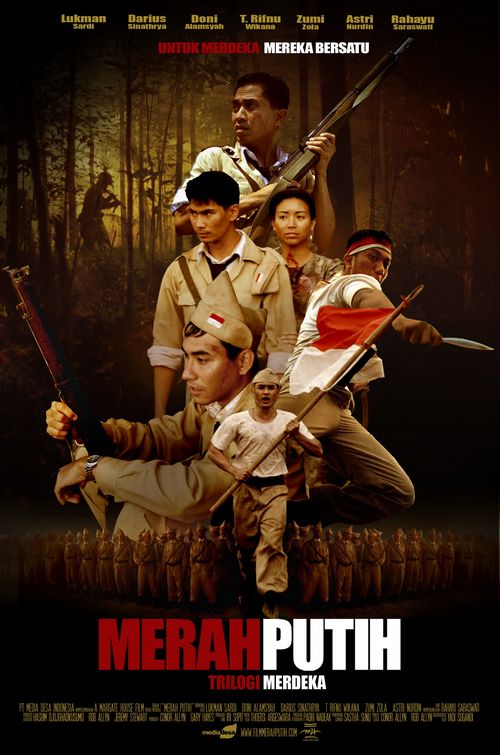
Kalimat yang jleb sangat ini kira-kria bunyinya seperti itu, saya ambil dari salah satu adegan di film "Merah Putih." Bagi saya kalimat ini terkeren pertama, lalu pilihan saya yang kedua "Bau Orang Belanda itu seperti keju." (?)


(courtesy: id.wikipedia.org)

Tuh, bahkan di posternya saja disebutkan "Untuk merdeka mereka bersatu"


Hari-hari seperti Hari Sumpah Pemuda ini paling nggak bisa mengajarkan kita semua sedikit pelajaran, hadiah dari para pendahulu kita semua, orang-orang yang selalu menaruh harapan pada para generasi mudanya. Untuk itu lah, jangan sampai harapan mereka musnah!

Bagi para generasi muda dengan impiannya yang tinggi, bagi para penerus bangsa Indonesia, selamat Hari Sumpah Pemuda!

Dadah

-Nibras Sakkir